
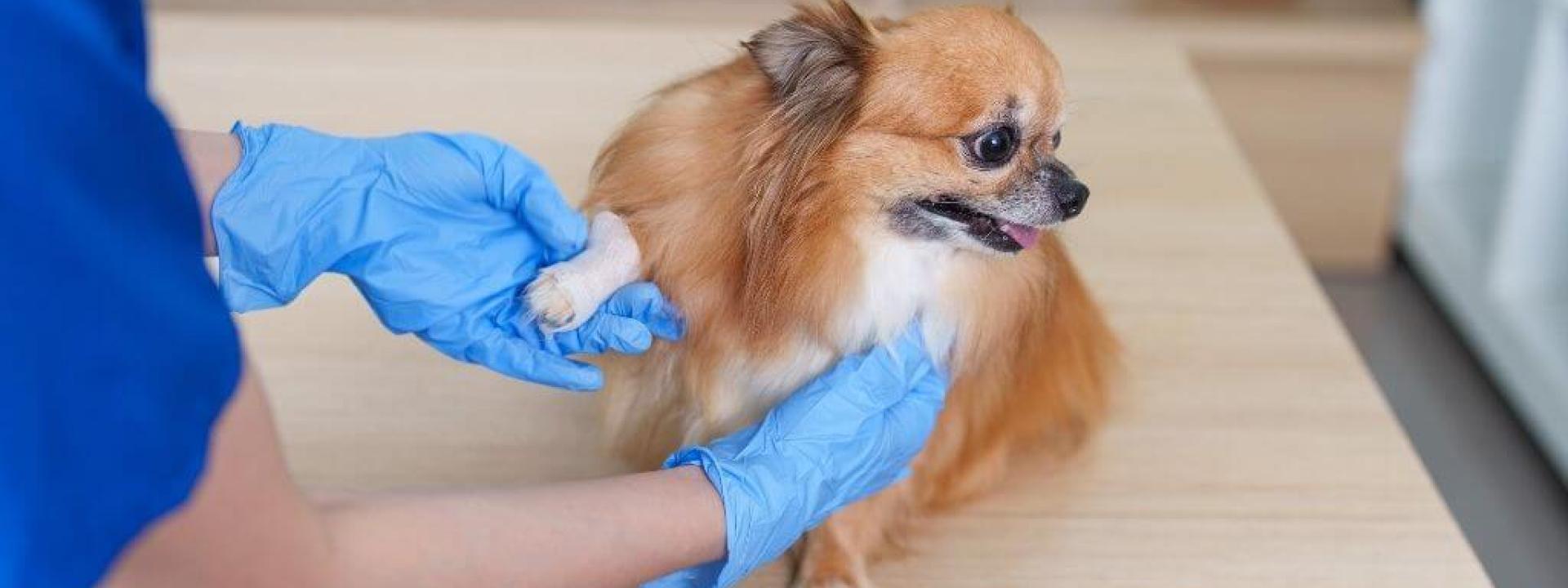
A dog who starts limping after a jump, rough play session, fall, or other injury may seem to have nothing more than a sore paw. Sometimes the cause is minor, but limping can also point to an injury involving a muscle, tendon, ligament, joint, bone, paw, or even the nervous system. Because dogs don't always show pain in obvious ways, it can be difficult to tell from a limp alone how serious the problem may be.
Your dog might still be eating, wagging their tail, or following you around the house even when they're uncomfortable. Some injuries also cause little or no visible swelling, so a leg that looks normal doesn't necessarily mean there's nothing wrong. Paying attention to how your dog is moving, what happened before the limp started, and whether their symptoms improve or worsen can help you recognize when it's time to have them examined.
Why Is My Dog Limping After an Injury?
Limping, also called lameness, simply means that your dog isn't using a limb normally. An injury can affect almost any part of the limb, including the paw and nails, muscles, tendons, ligaments, joints, or bones. Some injuries are easy to spot, while others cause pain without leaving anything obvious on the skin.
A dog who trips on the stairs may strain a muscle, while a hard landing after jumping can injure a joint or ligament. A thorn or grass awn between the toes can also cause a surprisingly pronounced limp. More significant trauma can result in a fracture or dislocation, particularly when there was a fall, collision, or other forceful impact. The fact that your dog is still putting some weight on the leg doesn't necessarily tell you how serious the injury is. Partial ligament injuries, joint injuries, and some fractures can produce less dramatic signs than a completely broken or displaced limb. That's why the circumstances surrounding the injury and what happens afterward matter so much.
What Injuries Can Cause a Dog to Limp?
After an injury, it's tempting to assume that a dog has simply pulled a muscle. Soft-tissue injuries certainly occur, but there are several other possibilities. Your veterinarian will consider the dog's age, breed, size, activity level, the affected limb, and how the injury happened when narrowing down the cause.
- Sprains and strains: Muscles, tendons, and ligaments can become overstretched or injured during running, jumping, slipping, or rough play.
- Ligament injuries: Damage to a joint ligament can cause sudden or persistent lameness. Cranial cruciate ligament injuries are a particularly important cause of hind-limb lameness in dogs.
- Fractures: A broken bone can cause pain, swelling, and an unwillingness to bear weight, although the appearance varies with the type and location of the fracture.
- Joint injuries: Trauma can damage a joint or cause a dislocation, resulting in pain and restricted movement.
- Paw or nail injuries: Torn nails, cuts, punctures, and foreign objects between the toes can all make walking painful.
- Nerve-related problems: Injuries affecting the spine or nerves can sometimes produce weakness or an abnormal gait rather than straightforward orthopedic pain.
More than one problem can also occur at the same time. For example, a dog who injures a knee may begin shifting weight onto the other limbs, which can change how they move and place additional strain on those areas. Identifying the original source of pain is therefore more useful than treating the limp itself as a diagnosis.
When Is Limping an Emergency?
Not every limp requires an emergency hospital visit, but some situations warrant immediate care. A dog who cannot stand or walk without assistance, has an obvious fracture, or begins limping after major trauma should be evaluated urgently.
Emergency evaluation is also appropriate when limping occurs alongside difficulty breathing, collapse, severe weakness, uncontrolled bleeding, significant pain, or other signs of serious injury. These symptoms can indicate that the problem extends beyond a simple limb injury.
If your dog is carrying the leg completely, crying out with movement, or has a limb that appears deformed or sits at an unusual angle, don't try to straighten it yourself. Keep your dog as still as possible and arrange veterinary care. Manipulating a fracture or dislocated joint can cause additional pain or damage.
How Long Can I Wait to See If My Dog Stops Limping?
The answer depends on what happened and how your dog is behaving now. A brief, mild limp that disappears quickly may not require an immediate appointment, particularly when there was no significant trauma. However, a limp that continues, becomes more pronounced, or keeps returning deserves veterinary attention.
Don't use a single good hour as proof that an injury has healed. Dogs can look much better after resting and then limp again after running, playing, or climbing stairs. If your dog repeatedly becomes lame after activity, that pattern is useful information for your veterinarian even if they appear comfortable while resting.
We strongly recommend veterinary evaluation when a limp lasts more than a day or two, or sooner when the pain is severe, sudden, or worsening. A previously injured dog should also be examined sooner if they stop using the limb, develop swelling, or show a noticeable change in behavior.
What Should I Do for a Limping Dog at Home?
Until you know what caused the limp, restrict your dog's activity. Skip running, jumping, stairs, rough play, and long walks, and use short leash walks only when necessary. Rest can prevent a minor injury from becoming worse, but it doesn't replace an examination when the limp is significant or persistent.
You can look at the paw if your dog is comfortable with gentle handling. Check the pads, nails, and spaces between the toes for a visible cut, torn nail, swelling, or foreign material. Stop immediately if your dog shows pain, and don't manipulate the joints or repeatedly bend the leg to try to locate the problem.
Do not give your dog human pain medication unless your veterinarian specifically instructs you to use a particular medication and dose. Medications appropriate for people can be unsafe for dogs, and the safest pain-control plan depends on your dog's health and the underlying injury.
Why Some Injuries Don't Have Visible Signs
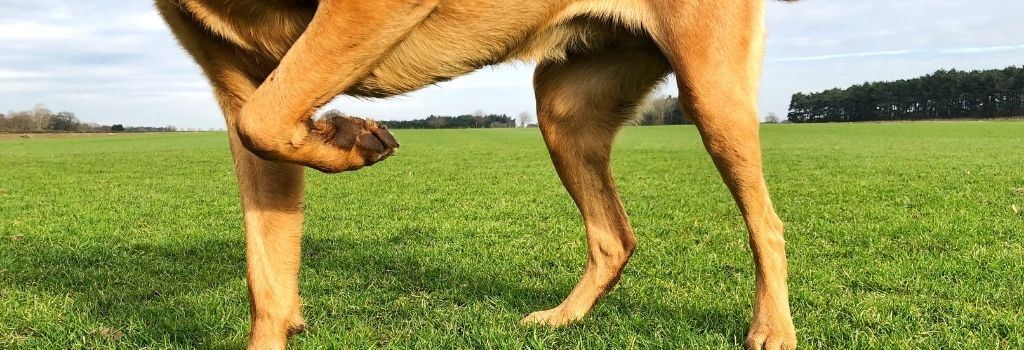
One of the most frustrating parts of a dog's injury is that the painful area isn't always obvious. A torn ligament, tendon injury, or joint problem may leave the skin looking completely normal. Even some fractures may not produce a dramatic deformity, particularly when the bone remains relatively aligned.
That's why finding no swelling or wound doesn't necessarily mean there is nothing wrong. Your dog's gait can provide important clues. Shorter steps, shifting weight away from one limb, reluctance to climb stairs or jump, difficulty getting up, or repeatedly sitting with one leg positioned differently can all indicate discomfort.
It's also worth remembering that dogs don't always make the source of pain obvious. They may compensate by changing their posture or using another limb more heavily. A veterinarian evaluates more than the visibly affected area because pain can sometimes originate somewhere other than where the limp first caught your attention.
How Veterinarians Diagnose a Limp
The examination usually begins with questions about when the limp started, whether it followed a particular injury, and whether it has become better or worse. Your veterinarian will observe your dog standing and walking and may evaluate how they rise, turn, and move. A thorough orthopedic examination then helps localize pain, swelling, instability, or restricted movement.
Your veterinarian may examine all four limbs as well as the spine rather than focusing only on the leg your dog appears to favor. This helps distinguish a localized injury from compensation or another source of pain. If your dog moves differently at home than in the clinic, a short video of the limp can be extremely helpful.
When Does a Limp Require Imaging?
Some injuries can be identified through the physical examination alone, but additional testing may be needed. X-rays are commonly used to evaluate bones and certain joint problems, while CT or MRI can provide more detailed information when a soft-tissue, spinal, or complex orthopedic injury is suspected. Joint fluid analysis or other testing may also be recommended depending on the findings.
Not every limping dog needs advanced imaging. The testing plan depends on the severity and duration of the lameness, the suspected source of pain, and what your veterinarian finds during the examination.
How Is a Dog Limp Treated?
Treatment depends entirely on the underlying problem. A mild soft-tissue injury may be managed with activity restriction and veterinarian-prescribed pain control, while a fracture or significant ligament injury may require more involved treatment. Some dogs benefit from physical rehabilitation, and certain orthopedic injuries require surgery or referral to a specialist.
The most important thing is to avoid assuming that two dogs with similar-looking limps need the same treatment. Rest that is appropriate for one injury may not be enough for another, and returning to normal activity too quickly can interfere with recovery. Your veterinarian can give you specific guidance on exercise, medication, rehabilitation, and follow-up based on the diagnosis.
Don't Ignore a Limp That Started With an Injury
A limp is your dog's way of showing that normal movement is being affected, whether the cause is a sore paw or a deeper orthopedic injury. When the limp follows a known injury, it's worth paying close attention to how your dog is using the limb rather than assuming they'll simply walk it off.
Keep activity limited, avoid manipulating a painful leg, and contact your veterinarian when the limp is severe, persistent, worsening, or associated with other concerning signs. Early evaluation can help identify the source of pain before an injury has more time to interfere with your dog's movement and recovery.
If you have questions and you'd like to reach out to us, you can call us directly at (502) 456-2870, or you can email us at [email protected]. Don't forget to follow us on social media Facebook, Instagram.