
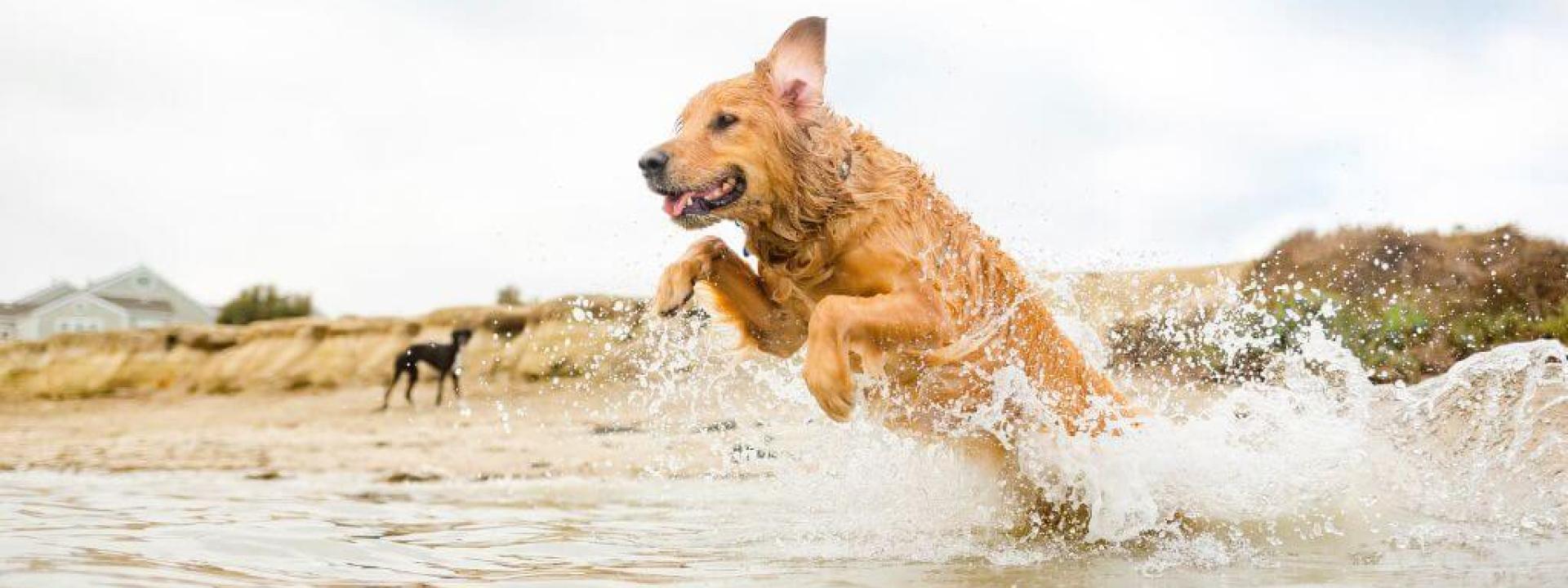
A beach or lake day can be one of the best parts of summer with your dog. There is room to explore, water to splash in, and plenty of new smells to investigate. But for some dogs, the fun is followed by an upset stomach, loose stool, or a sudden need to go outside much more often than usual.
Diarrhea after swimming or playing near water can happen for several reasons. Some causes are mild and short-lived, while others need prompt veterinary attention. The key is knowing what your dog may have been exposed to, how they are acting overall, and when diarrhea after a beach or lake day is more than a simple stomach upset.
Why Dogs Can Get Diarrhea After Swimming or Playing Near Water
Dogs experience the beach and lake differently than we do. They may drink from the water, carry sandy toys in their mouth, eat things they find along the shore, lick their wet coat afterward, or swallow water while swimming. Any of these can irritate the digestive tract or expose your dog to something that does not agree with them. Diarrhea may start the same day or within the next day, depending on the cause. In some dogs, it may be related to swallowing salt water, lake water, sand, or unfamiliar snacks. In others, diarrhea may be part of a bigger problem, especially if it comes with vomiting, weakness, loss of appetite, tremors, or trouble breathing.
Not every episode of diarrhea after a water day is an emergency, but it should be watched closely. A dog who is bright, drinking, and has one or two loose stools is different from a dog who is lethargic, repeatedly vomiting, or having frequent watery diarrhea.
Common Causes of Diarrhea After a Beach Day
Beach days come with a few specific digestive risks. Dogs may swallow salt water while fetching toys, chasing waves, or drinking from puddles along the shore. Even if they are not trying to drink ocean water, excited play can lead to accidental swallowing.
Salt water can draw fluid into the intestines, which may lead to diarrhea, vomiting, and dehydration. A few mouthfuls may only cause temporary digestive upset in some dogs, but larger amounts can be more serious and may affect the body’s fluid and electrolyte balance.
Salt Water and “Beach Diarrhea”
Some owners describe this as “beach diarrhea” because loose stool can develop after a dog drinks ocean water. The stool may be watery and urgent, especially if the dog swallowed more than a small amount. Your dog may also seem thirstier than usual after playing in salt water.
The best way to reduce this risk is to bring fresh water and offer it often. Take breaks in the shade, discourage your dog from drinking ocean water, and rinse toys so they are not constantly covered in salt and sand.
Sand, Trash, and Shoreline Finds
Sand can also be a problem if your dog swallows enough of it. This may happen when dogs dig, chew on sandy toys, eat treats off the beach, or lick sand from their paws and coat. Small amounts may only irritate the stomach, but larger amounts can cause more significant digestive trouble.
Beaches can also have dead fish, shells, bait, food wrappers, discarded snacks, or other items that dogs love to investigate and pick up. These can cause stomach upset, and some may pose choking, obstruction, or toxicity risks. If your dog is the type to grab things quickly, keeping them on a leash and bringing clean toys from home can help.
Common Causes of Diarrhea After a Lake Day
Lake water can look clean and still contain bacteria, parasites, algae, or decaying organic matter that may upset your dog’s digestive system. Dogs may swallow lake water while swimming, retrieving, or cooling off. Some dogs also drink from shallow, stagnant areas where contamination may be more likely.
Freshwater exposure can be especially concerning when the water is warm, slow-moving, discolored, or has visible scum or algae. Dogs should not swim in or drink from water that looks questionable, has posted warnings, smells unusual, or has mats of algae along the surface or shoreline.
Parasites and Bacteria in Fresh Water
Some dogs develop diarrhea after exposure to contaminated freshwater. This can happen if they ingest water that contains infectious organisms. Depending on the cause, diarrhea may appear quickly or develop over the next several days.
If diarrhea continues, becomes watery, contains blood, or affects more than one pet in the household, your veterinarian may recommend a fecal test. Testing helps determine whether parasites or other infectious causes may be involved and whether treatment is needed.
Blue-Green Algae Is an Emergency Concern
One of the most serious lake-related risks is blue-green algae, also called cyanobacteria. The CDC notes that harmful algal blooms can produce toxins that cause illness in people and animals and may occur in fresh, salt, or brackish water.
Dogs can be exposed by drinking contaminated water, swimming in it, or licking it from their coat afterward. Signs can include vomiting, diarrhea, drooling, weakness, tremors, seizures, trouble breathing, collapse, or sudden severe illness. If your dog may have been exposed to suspicious water or algae, seek veterinary care immediately. Do not wait to see whether symptoms improve.
How to Tell Whether Your Dog’s Diarrhea Is Mild or More Serious
Diarrhea by itself does not always mean something dangerous has happened. Some dogs have a short episode of loose stool after excitement, a diet change, or mild stomach irritation. However, water-related diarrhea deserves extra attention because dogs may have swallowed salt water, contaminated freshwater, sand, toxins, or unfamiliar objects.
Start by looking at the whole dog, not just the stool. Is your dog alert? Are they drinking? Are they able to rest? Are they keeping food and water down? A dog who has mild loose stool but is otherwise acting normal can often be monitored more calmly than a dog who seems weak, painful, disoriented, or unable to keep water down.
- Monitor closely: One or two loose stools in a dog who is bright, comfortable, and drinking may be watched at home for a short period.
- Call your veterinarian: Diarrhea that lasts more than 24 hours, happens repeatedly, or is paired with vomiting, appetite loss, or low energy should be discussed with your veterinary team.
- Seek urgent care: Bloody diarrhea, repeated vomiting, collapse, weakness, tremors, seizures, pale gums, difficulty breathing, or suspected toxin exposure should be treated as urgent.
- Be extra cautious with vulnerable dogs: Puppies, senior dogs, small dogs, and dogs with existing medical conditions can become dehydrated or unstable more quickly.
What You Can Do at Home After a Water Day
If your dog has mild diarrhea but is otherwise acting normal, start by making sure they have access to fresh water. Diarrhea can increase fluid loss, and dogs who played hard in the heat may already need extra hydration. Offer water in small, frequent amounts if your dog seems eager to drink too much at once.
Do not give human anti-diarrhea medication unless your veterinarian specifically tells you to. Some medications that people use are not appropriate for every dog and may be unsafe depending on your pet’s age, breed, health history, or what they may have ingested.
When Food Should Be Adjusted
For mild stomach upset, your veterinarian may recommend temporary diet changes, such as smaller meals or a bland diet, depending on your dog’s health history. Because puppies, diabetic dogs, dogs with chronic disease, and very small dogs may not tolerate fasting or diet changes well, it is best to ask your veterinary team before making major adjustments.
If your dog is vomiting, refusing food, acting weak, or having frequent watery diarrhea, skip home trial-and-error and contact your veterinarian. The safest plan depends on what your dog may have swallowed and how they are acting overall.
How to Help Prevent Diarrhea After Beach or Lake Trips
You cannot control every part of an outdoor adventure, but you can reduce some of the most common risks. Bring fresh water from home and offer it often so your dog is less tempted to drink from the ocean, lake, puddles, or shoreline. Take breaks before your dog gets overheated or overly thirsty.
Choose swimming areas carefully. Avoid stagnant water, areas with visible algae or scum, posted water quality warnings, strong odors, dead fish, or heavy debris. If you are not sure whether the water is safe, keep your dog out. After swimming, rinse your dog with clean water and dry them well, especially if they were in lake water or salt water.
At the beach, keep sandy toys rinsed and avoid throwing treats directly onto the sand. At the lake, discourage drinking from the water and keep your dog away from algae, foam, or mats along the shoreline. For dogs who eat first and think later, a leash or long line can make outdoor trips much safer.
When to Call Your Veterinarian After a Beach or Lake Day
Call your veterinarian if your dog’s diarrhea is frequent, watery, bloody, or lasts longer than a day. You should also call if diarrhea comes with vomiting, low energy, reduced appetite, belly discomfort, fever, dehydration, or any behavior that feels unusual for your dog.
Seek emergency care if your dog may have been exposed to blue-green algae, drank a large amount of salt water, collapsed, seems disoriented, has tremors or seizures, is struggling to breathe, or cannot keep water down. These situations can become serious quickly, and early treatment is safer than waiting.
When you call, share where your dog went, whether it was ocean, lake, pond, or river water, whether you saw algae or posted warnings, what your dog may have eaten or drunk, when the diarrhea started, and whether there are other symptoms. These details can help your veterinary team decide what care is needed.
Helping Your Dog Enjoy Water Safely
Diarrhea after a beach or lake day is fairly common, but the cause can vary. Some dogs have temporary digestive upset from swallowed salt water, sand, or excitement. Others may be reacting to contaminated freshwater, parasites, shoreline debris, or a toxin exposure that needs immediate care.
The best approach is to plan ahead, bring fresh water, watch what your dog drinks and eats, rinse them after swimming, and avoid questionable water. If your dog develops diarrhea and you are unsure whether it is mild or serious, contact your veterinarian. A quick call can help you decide whether home monitoring is reasonable or your dog should be seen.
If you have questions and you'd like to reach out to us, you can call us directly at (502) 456-2870, or you can email us at [email protected]. Don't forget to follow us on social media Facebook, Instagram.