
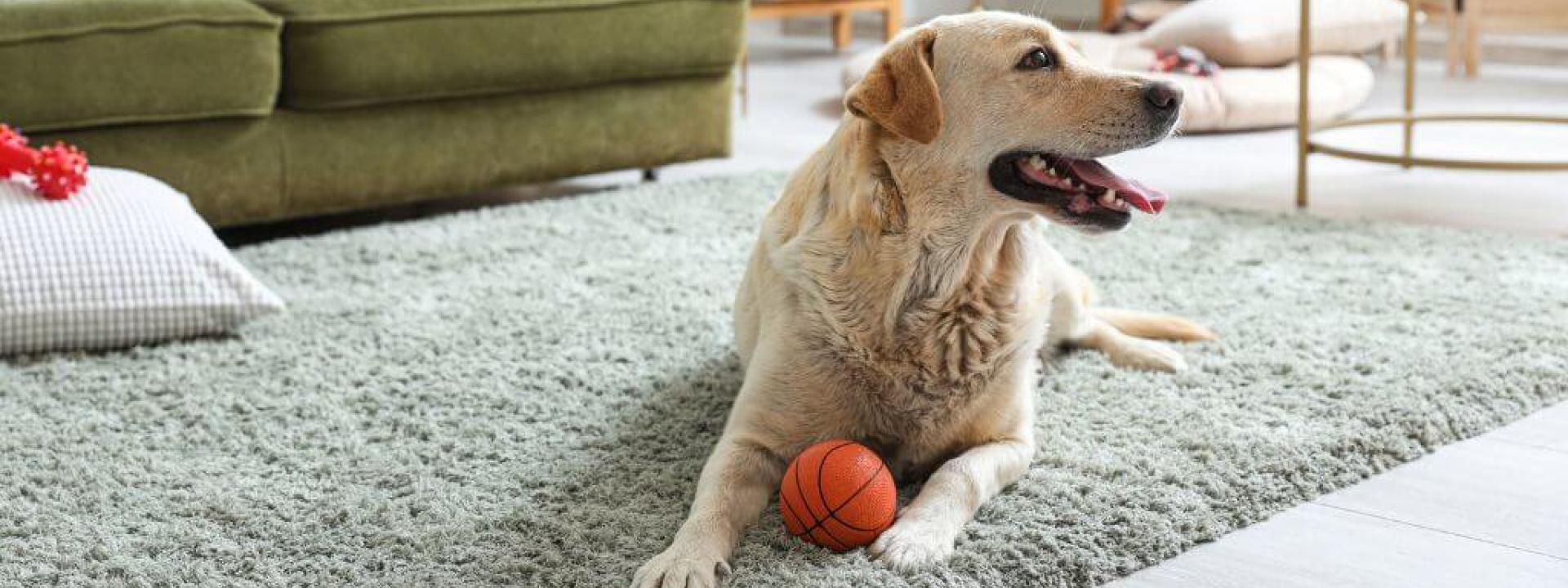
Living with a high-energy dog can be a lot of fun, but it can also leave you wondering how to keep that energy productively focused when a long walk or trip to the park is not in the cards. Bad weather, a busy schedule, recovery from an illness or injury, or simply limited outdoor space can all mean more time inside. Fortunately, indoor enrichment gives your dog opportunities to sniff, think, learn, play, and make choices without requiring a huge amount of space. The right activities can complement your dog's regular exercise routine and give them something meaningful to do when outdoor activities are limited.
Why Indoor Enrichment Matters for Dogs
Just like people, dogs can get bored. Dogs need opportunities to use their senses, interact with their environment, solve problems, play, and engage in behaviors that are appropriate for them. When those opportunities are limited, some dogs may turn to behaviors such as chewing, barking, or other forms of attention-seeking or destructive behavior.
Indoor enrichment helps meet these needs by giving dogs appropriate outlets for their energy and natural behaviors, even when outdoor activities are limited. For example, food puzzle toys can provide enrichment by encouraging dogs to use their problem-solving skills and natural foraging instincts. Activities like these can help make time indoors more mentally engaging while providing a constructive way to stay occupied.
Enrichment also gives you a chance to spend quality time with your dog. Training, scent games, and interactive play all allow you to participate rather than simply handing your dog a toy and leaving them to figure it out. For many dogs, that shared activity is part of what makes enrichment so rewarding.
How Indoor Enrichment Can Benefit Your Dog
Indoor enrichment gives your dog healthy ways to stay mentally and physically engaged, especially when outdoor activity is limited. Depending on the activity and your dog's individual needs, enrichment may help:
- Provide mental stimulation through problem-solving and exploration
- Give your dog appropriate outlets for natural behaviors such as sniffing, chewing, searching, and playing
- Reduce boredom by adding variety and purpose to the day
- Encourage physical activity through games and interactive play
- Build confidence as your dog learns new skills or works through simple challenges
- Strengthen the bond between you and your dog through shared activities
- Make meals and treats more engaging when food puzzles or scent-based games are used
Turn Mealtime Into Indoor Enrichment

As we mentioned above, one simple way to add enrichment to your dog's day is to change how they receive their food. Rather than serving every meal in a traditional bowl, try using an appropriately sized food puzzle, slow feeder, or food-dispensing toy. This gives your dog an opportunity to sniff, manipulate, and problem-solve while working for some of their meal.
Start with an activity your dog can solve relatively easily. If they immediately lose interest or become frustrated, make the challenge simpler. As your dog becomes familiar with the game, you can gradually introduce more difficult puzzles or different types of food toys.
Supervise your dog when introducing a new food puzzle or enrichment toy, particularly if they tend to chew or destroy toys. Choose products that are appropriate for your dog's size and play style, and remove anything that becomes damaged or develops pieces that could be swallowed.
Try Scent Games & Indoor Treasure Hunts
Dogs experience much of their world through their sense of smell, so scent-based games can be an easy way to make time indoors more interesting. You do not need special equipment to get started. Hide a few pieces of your dog's regular food or appropriate treats in easy-to-find locations and encourage them to search.
Begin with hiding places that are obvious enough for your dog to succeed. You can gradually make the game more challenging as they understand what you are asking them to do. You can also hide a favorite toy instead of food or teach a "find it" cue that signals the start of the game.
Keep the search area free from anything your dog should not chew or swallow. If you use treats, account for them as part of your dog's overall daily food intake, especially if you are playing these games regularly.
Use Short Training Sessions as Mental Exercise
Training does not have to stop when you come inside. In fact, a few minutes of focused training can turn an otherwise uneventful day into an opportunity for your dog to learn something new. You can practice familiar cues such as sit, down, stay, and come, or introduce behaviors such as touching a target, going to a mat, or putting a toy away.
Keep sessions short enough to hold your dog's attention and use rewards that your dog finds motivating. Positive reinforcement can make training an enjoyable activity while helping your dog understand which behaviors you want to see more often.
Indoor training can also be useful for dogs who need to practice settling down. Teaching your dog to relax on a designated mat or bed gives them a predictable activity that can be practiced in different situations. This can be particularly useful on days when your usual routine changes.
Make Indoor Play Active Without Making It Risky
Interactive play can provide physical activity when outdoor exercise is limited. Tug, retrieving a toy over a short distance, and movement-based games can all work in the right space. The key is to match the activity to your dog's age, physical condition, and surroundings rather than trying to create an indoor version of an intense outdoor workout.
Look around the room before starting a game. Clear away objects your dog could knock over, create enough space for movement, and avoid slippery surfaces when possible. A game that involves sudden turns, jumping, or fast acceleration may be inappropriate for a dog with orthopedic problems, pain, excess weight, or another health concern.
A hallway can sometimes work for a few short, controlled retrieving games, provided your dog has secure footing and enough room to stop safely. You can also combine movement with training by asking for a simple behavior between repetitions. This keeps the game mentally engaging instead of focusing solely on physical exertion.
Rotate Toys to Keep Enrichment Fresh
It is easy for toys to become part of the background when they are always available. Rotating them can create some novelty without requiring you to continually buy new products. Keep several appropriate toys put away and bring out different options throughout the week.
You can also pair certain toys with specific activities. A food puzzle might come out during a quiet afternoon, while a tug toy might be reserved for interactive play with you. Rotating options gives your dog opportunities to make choices and may help maintain interest in toys they already know.
Inspect toys regularly for loose pieces, tears, or other damage. Dogs that chew intensely may need sturdier products than dogs that primarily carry or gently manipulate their toys. No toy is appropriate for every dog, so your dog's individual play style should guide your choices.
Create a Simple Indoor Obstacle Course
An obstacle course can sound elaborate, but it does not have to be. You can use safe, stable objects to encourage your dog to move around, under, or beside obstacles while following simple cues. For example, you might ask your dog to walk around a chair, go to a mat, step over a very low obstacle, or weave slowly between objects.
Keep the focus on controlled movement rather than jumping over furniture or racing through the house. Avoid unstable boxes, chairs that could tip, elevated surfaces, or setups that require your dog to jump from one piece of furniture to another. Always supervise these activities and give your dog plenty of room to move without slipping or colliding with an object.
Your veterinarian can help determine which types of activity are appropriate if your dog is recovering from an injury, has arthritis, is overweight, or has another condition that may affect exercise tolerance.
Build Indoor Enrichment Into Your Dog's Routine
You do not need to turn every rainy afternoon into an elaborate activity session. A few small changes throughout the day can provide meaningful enrichment. One meal might go into a food puzzle, a few minutes might be spent practicing training cues, and a short scent game can give your dog something new to investigate.
Pay attention to how your dog responds. Some dogs enjoy solving food puzzles, while others would rather sniff around the house, play tug, practice tricks, or spend time interacting with their people. The goal is not to find one activity that works for every dog. It is to offer appropriate opportunities that fit your dog's preferences, abilities, and daily routine.
Indoor enrichment works best as one part of a bigger picture that includes appropriate physical activity, social interaction, rest, training, and routine veterinary care. On days when outdoor activities are limited, thoughtful indoor games can help keep your high-energy dog engaged without turning your living room into a racetrack. With a little variety and some attention to safety, staying inside can still give your dog plenty of ways to use their body, brain, and senses.
If you have questions, we would love to answer them for you. Please give us a call at the office at (502) 456-2870, or you can email us at [email protected]. Our staff would love to talk with you!
Don't forget to follow us on social media Facebook, Instagram.