
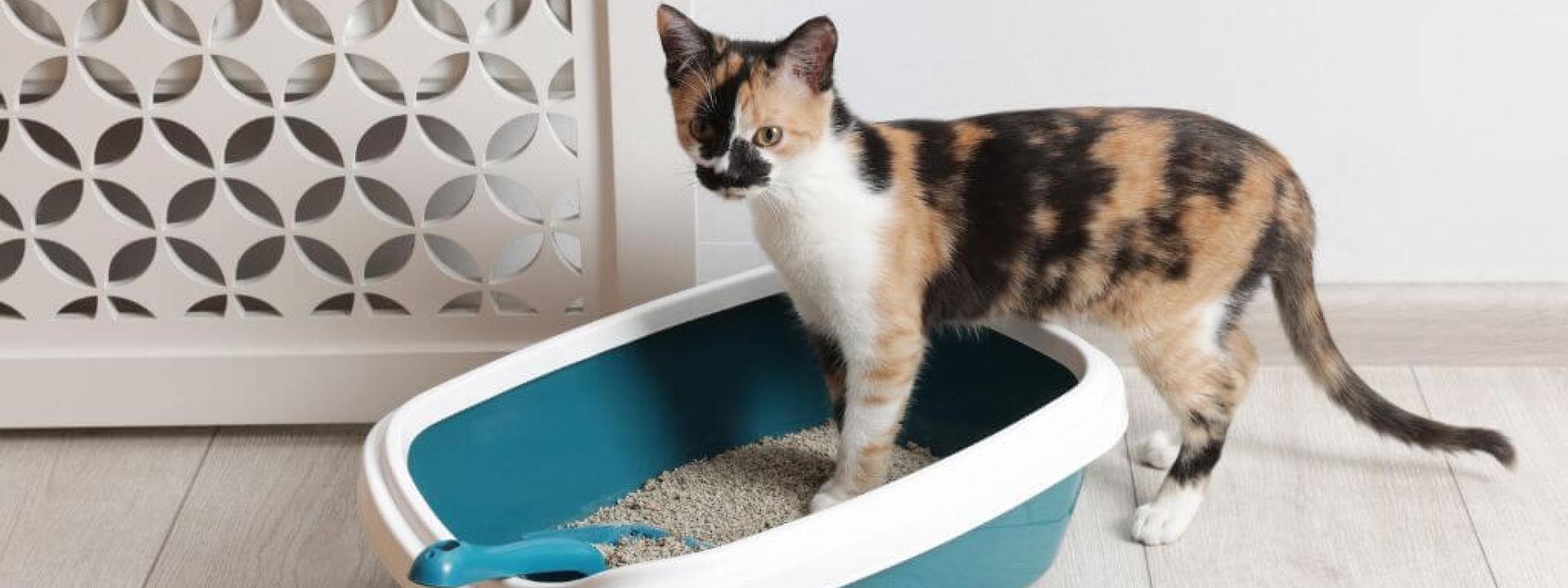
Seeing your cat repeatedly enter the litter box, squat, and strain can be confusing. Are they trying to pee or poop? The posture can look almost identical, which means it isn't always easy to tell what's happening just by watching. While some causes of straining may be less urgent than others, the behavior can also signal a serious problem that needs immediate veterinary attention.
A cat straining in the litterbox may be experiencing a urinary problem, constipation, or another condition affecting elimination. The challenge is that these conditions can share similar signs, even though the risks and urgency of treatment can be very different. Understanding what to look for and when to seek veterinary care can help you recognize a potentially dangerous situation before it becomes life-threatening.
Is My Cat Straining to Pee or Poop?
It is surprisingly difficult to tell if your cat needs to go number one or two. Cats use a similar crouched posture for urination and defecation, and a cat experiencing discomfort may repeatedly enter and leave the box without producing much of anything. Owners may understandably assume their cat is constipated when the problem is actually urinary.
Instead of trying to diagnose the problem based on posture, pay attention to what is appearing in the litter box. Look for urine clumps, stool, changes in their size or frequency, and whether your cat seems uncomfortable. If you use clumping litter, checking for newly formed urine clumps can provide useful information to share with your veterinarian.
Signs That May Point Toward a Urinary Problem
Straining to urinate can be a sign of a lower urinary tract problem, which may cause inflammation, irritation, and pain. Causes can include feline idiopathic cystitis, urinary stones, urethral plugs, and other urinary tract conditions. These signs do not identify the exact cause on their own. A veterinary examination is needed to determine why your cat is struggling to pee and whether urine flow is partially or completely obstructed.
Signs that may point toward a cat urinary problem include:
- Repeated trips to the litter box
- Straining or remaining in a urinating posture for an unusually long time
- Producing only small drops of urine or no visible urine
- Crying or vocalizing while attempting to urinate
- Blood visible in the urine
- Urinating outside the litter box
- Frequently licking around the genital area
- Becoming increasingly restless, uncomfortable, withdrawn, or lethargic
Not every urinary problem is an emergency, but cats showing these symptoms should be evaluated promptly. If your cat repeatedly attempts to urinate but produces only drops or no urine, a urinary obstruction may be present. Seek emergency veterinary care immediately rather than waiting to see whether your cat improves.
Why Urinary Blockage Is Especially Concerning in Male Cats
Urinary problems can affect cats of either sex. However, male cats are more susceptible to urethral obstruction because their urethra is longer and narrower than that of a female cat. Material such as inflammatory debris, mucus, crystals, or urinary stones can interfere with the passage of urine through this narrow channel. When urine cannot leave the bladder, the consequences can become life-threatening as normal kidney function and the body's fluid and electrolyte balance are disrupted. Although blockages are more common in males, they can also occur in female cats, and a suspected obstruction requires emergency treatment regardless of sex.
Could My Cat Be Constipated Instead?
Yes. Constipation is another common reason a cat may squat and strain in the litter box, and it can be difficult to distinguish from urinary problems based on behavior alone. Constipation in cats occurs when passing stool becomes difficult or infrequent, and the retained feces are often dry and hard. Some cats repeatedly attempt to defecate while producing only small pieces of firm stool or nothing at all.
Constipation can occur for several reasons, including inadequate hydration, reluctance or discomfort associated with defecating, ingestion of poorly digestible material, certain medications, abnormalities affecting the colon, or other underlying medical conditions. Chronic or severe constipation in cats may require more extensive veterinary evaluation rather than simply changing a cat's food at home. Mild constipation is not always an emergency, but persistent straining or difficulty passing stool warrants veterinary attention. Severe constipation, particularly when accompanied by repeated vomiting, significant abdominal pain, marked lethargy, or a loss of appetite, requires prompt veterinary evaluation and may warrant emergency care depending on the severity of the symptoms.
What Constipation May Look Like
The difficulty is that straining from constipation can look much like urinary straining. If you cannot confidently tell whether your cat is passing urine, do not assume constipation is the explanation. Signs may include:
- Spending a long time in the litter box
- Repeatedly posturing or straining to defecate
- Passing small amounts of dry, firm stool
- Producing little or no stool despite repeated attempts
- Reduced appetite
- Vomiting
- Lethargy
- Signs of abdominal discomfort
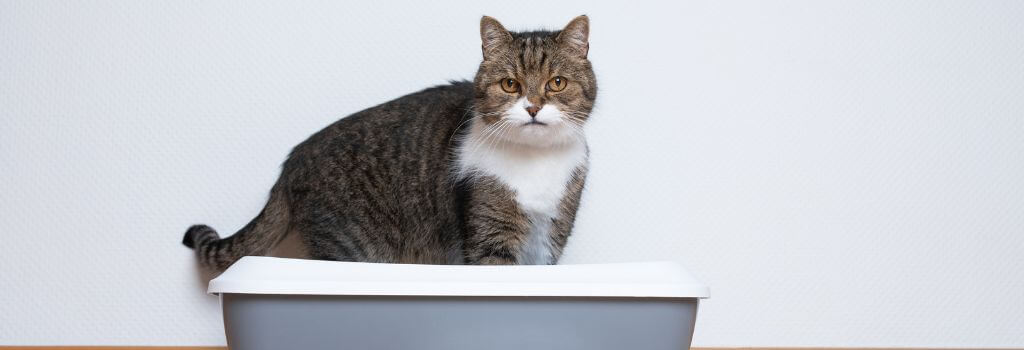
What Should I Do If My Cat Keeps Straining in the Litter Box?
Start by checking the litter box closely. If possible, determine when your cat last produced a normal amount of urine and when they last passed stool. In a multi-cat household, this can be difficult because you may not know which cat produced each clump or bowel movement. Separating the symptomatic cat with access to a clean litter box may help you observe what they are producing, but it should not delay veterinary care when urinary obstruction is possible.
A cat that repeatedly strains deserves veterinary evaluation even if some urine or stool is still being produced. Urinary inflammation, stones, constipation, and other conditions can share similar signs, and an examination can help distinguish among them. Depending on your cat's symptoms, a veterinarian may recommend examination of the bladder and abdomen, urinalysis, blood testing, x-rays, ultrasound, or other diagnostic testing.
If your cat repeatedly attempts to urinate but produces little or no urine, seek emergency veterinary care immediately rather than waiting to see whether the situation improves. Passing a few drops of urine does not rule out a partial obstruction or a blockage that is developing. Do not give human laxatives, enemas, pain relievers, or other medications unless specifically instructed by a veterinarian, as some products intended for people can be inappropriate or dangerous for cats.
When Litter Box Straining Should Prompt a Vet Visit
You do not need to determine whether your cat has cystitis, urinary stones, constipation, or a blockage before asking for help. What matters most is recognizing when their behavior has changed and getting veterinary guidance before the problem becomes more serious.
If your cat is repeatedly attempting to urinate but producing little or no urine, seek emergency veterinary care immediately. Other urinary symptoms and persistent difficulty passing stool also warrant veterinary attention, even if your cat otherwise seems comfortable. When you're unsure what your cat is trying to pass, it's safest to seek prompt veterinary evaluation rather than assume they're constipated.
If you have questions, we would love to answer them for you. Please give us a call at the office at (502) 456-2870, or you can email us at [email protected]. Our staff would love to talk with you!
Don't forget to follow us on social media Facebook, Instagram.