
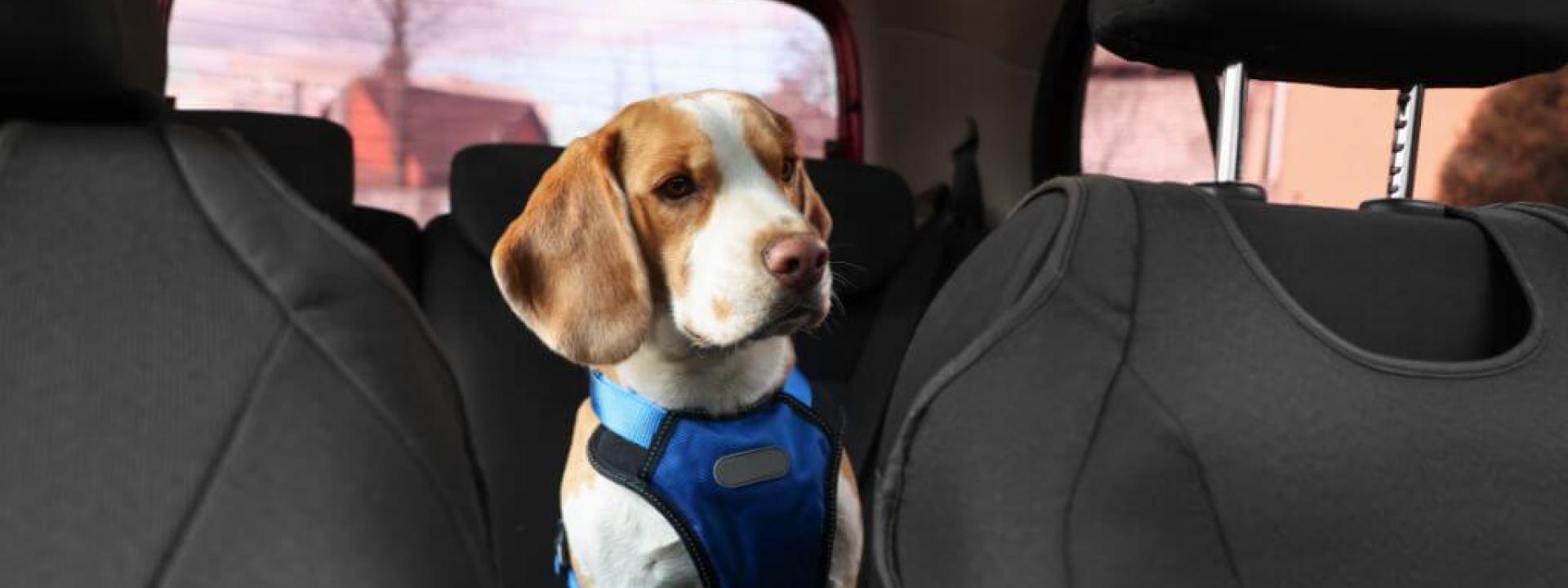
Car accidents can be frightening for pet owners, especially when your dog or cat seems okay at first, and you are left wondering if something is wrong or if they could possibly be hurt. Unfortunately, injuries aren’t always easy to spot. Whether your pet was hit by a car or was riding with you in the car when an accident happened, the force of the impact can cause injuries to the chest, abdomen, bones, spine, and other areas of the body.
Some injuries are obvious right away, while others may not show clear signs in the first few minutes or even hours. That’s why it’s important to have your dog or cat evaluated by a veterinarian as soon as possible after a serious accident, even if they seem to be acting normally.
Why Can Car Accident Injuries Be Easy to Miss?
When a pet is involved in a car accident, the most serious injury isn't always the one you can see. Vehicle-related trauma can involve more than the part of the body that was directly impacted during the collision. A pet struck by a vehicle may experience compression or additional injury from being thrown or dragged. A pet riding in a vehicle can also be injured by sudden acceleration, deceleration, or impact with the interior of the vehicle.
Some injuries are also hidden beneath the skin or are not immediately apparent during a quick visual check at home. Research on pets involved in traffic accidents has found injuries such as lung contusions, broken limbs, pelvic fractures, and neurological problems. This is why you can't always judge the severity of an accident by how your pet looks or acts afterward. Even when everything seems okay on the outside, there may be injuries that aren't immediately visible.
Signs That Should Prompt Immediate Veterinary Care
After an accident, your pet may be frightened, quiet, or simply acting differently than usual, which can make it hard to tell what's a normal stress response and what's a sign of injury. Even subtle changes in the way your pet moves, breathes, or behaves can sometimes point to an injury that isn't visible from the outside. Pay attention to changes in how your pet is breathing, moving, responding, or behaving, even if you don't see an obvious injury.
The first few hours following the incident are very important, and you should seek immediate veterinary care if you notice any of the following:
- Rapid, shallow, labored, or open-mouth breathing
- Pale, gray, or bluish gums
- Weakness, collapse, severe lethargy, or reduced responsiveness
- A swollen or painful abdomen
- Difficulty standing, walking, or using one or more legs
- Disorientation, seizures, abnormal eye movements, or other neurological changes
- Blood in the urine or difficulty passing urine
- Persistent vomiting or significant abdominal discomfort
Internal Bleeding & Abdominal Organ Injuries
Blunt trauma can injure structures inside your pet’s abdomen without creating an external wound. Damage to abdominal organs or blood vessels may result in internal bleeding. Because there may be little to see from the outside, these injuries can be especially difficult for pet owners to recognize right away.
Possible signs of internal trauma in dogs and cats can include weakness, unusual tiredness, pale gums, abdominal discomfort or swelling, collapse, vomiting, or changes in breathing. These signs are not specific to internal bleeding, but after a vehicle accident, they warrant prompt veterinary attention.
A veterinarian may use a physical examination along with diagnostic testing to evaluate an injured pet. Depending on the findings, this may include bloodwork and imaging of the chest or abdomen. Imaging such as point-of-care ultrasound or radiographs can help the veterinary team look for injuries that aren't obvious during a physical exam.
Spinal, Head, & Neurological Trauma
A significant impact can injure the brain, spine, spinal cord, or nerves. While paralysis can be a sign of neurological trauma, the symptoms aren't always that obvious. Changes in your pet's coordination, balance, posture, alertness, or ability to move their limbs can also indicate a problem. A neurological exam can help your veterinarian determine which part of the nervous system may be affected and whether additional testing or imaging is needed.
If you're concerned about a possible spinal injury, try to keep your pet as still and supported as possible during transportation. Avoid unnecessary twisting or bending, and contact the veterinary hospital for guidance if you're unsure how to move or transport your pet safely.
Fractures & Pelvic Injuries May Not Always Look Dramatic
Vehicle trauma can cause fractures involving the legs, ribs, pelvis, or other bones. But a fracture does not always cause a limb to appear obviously bent or displaced. Pets with certain fractures may still try to stand or walk, particularly when they are frightened or excited immediately after an accident. So, seeing your pet put weight on a leg doesn't necessarily mean the leg is uninjured.
Pelvic trauma deserves particular attention because the pelvis surrounds and lies near important nerves, blood vessels, the lower urinary tract, and portions of the gastrointestinal tract. A pet with a pelvic injury may show pain when walking or difficulty passing urine or stool. A veterinary examination and diagnostic imaging are needed to determine the location and severity of a suspected fracture.
Even if a pet appears able to walk after being hit, unnecessary movement should be minimized until injuries have been assessed. Handling a painful or frightened animal also requires caution because even normally gentle pets may bite when injured.
Signs That May Point to a Fracture or Pelvic Injury
After a significant impact, watch for changes in how your pet moves, stands, or responds to being touched. You may notice something as simple as a reluctance to move or a change in the way they carry themselves. Signs that may warrant further evaluation include:
- Limping or refusing to put weight on one leg
- Difficulty standing up, walking, or climbing
- An abnormal or uneven gait
- Reluctance to move, jump, or change position
- Pain, swelling, or sensitivity around a limb, hip, or pelvis
- Dragging a leg or holding a limb in an unusual position
- Difficulty urinating or passing stool after pelvic trauma
What If My Pet Was Riding in the Car During the Accident?
Not every pet involved in a car accident is hit by the vehicle itself. Your dog or cat can also be injured simply by being inside the vehicle when a crash occurs. A cat or dog in a car accident does not have to be thrown from the vehicle to sustain an injury. During sudden braking or a collision, an unrestrained animal can strike a seat, dashboard, door, window, cargo area, or another object inside the vehicle. Even restrained pets may experience considerable forces in a high-impact collision.
Tell the veterinarian that your pet was inside a vehicle during a crash and, if known, describe where the pet was positioned, whether a restraint or carrier was used, and whether the pet struck anything inside the vehicle. Even details that seem minor can help the veterinary team understand what happened and where to focus the examination.
Why a Veterinary Examination Matters After Significant Trauma
After a car accident, the veterinary team will first check for the most immediate concerns, including your pet's breathing, circulation, neurological function, pain, and signs of significant blood loss or other trauma. Once your pet is stable, your veterinarian may recommend additional testing based on the exam and the type of accident.
One of the most important things to remember is that you can't always tell how badly a pet is hurt just by looking at them. Your dog or cat may stand up, walk around, or even seem like themselves after an accident and still have an injury that isn't immediately obvious.
Whether your dog or cat was hit by a car or was riding with you when an accident occurred, it's important to take the possibility of injury seriously. Contact your veterinarian or an emergency veterinary hospital as soon as possible for guidance, even if your pet seems okay. A prompt veterinary evaluation can help identify injuries that may be difficult to recognize at home and ensure your pet receives the care they need.
If you have questions, we would love to answer them for you. Please give us a call at the office at (502) 456-2870, or you can email us at [email protected]. Our staff would love to talk with you!
Don't forget to follow us on social media Facebook, Instagram.