Your pet's coat can tell you more than whether it is time for a bath or brushing session. Changes in the texture, shine, thickness, or amount of shedding can sometimes be among the first visible signs that something has changed with your pet's health. While not every dull coat or patch of missing hair means your dog or cat is sick, knowing what is normal for your individual pet can help you recognize when a change deserves a closer look.
Your veterinarian considers the skin and coat as part of a pet's overall health assessment, along with their appetite, weight, behavior, and other physical findings. A healthy-looking coat is reassuring, but it is only one piece of the picture. Paying attention to your pet's normal appearance and grooming routine can help you notice meaningful changes and bring them to your veterinarian's attention.
What Does a Healthy Pet Coat Look Like?
There is no single appearance that defines a healthy coat for every dog or cat. Coat texture, length, thickness, and shedding patterns vary by breed and individual. A Poodle, Labrador Retriever, Persian cat, and domestic short-haired cat will naturally look very different, but each should have a coat that is appropriate for their breed and personal baseline.
In general, a healthy coat should be reasonably clean and well maintained, while the underlying skin should not have unexplained redness, sores, excessive flaking, or unusual oiliness. Some pets naturally have a little dandruff or shed more than others, particularly during seasonal changes. Knowing what is normal for your pet is often more useful than comparing their coat with another animal's.
Some changes may be easier to spot during routine grooming. Run your hands gently through your pet's coat, look for areas of thinning, and check places that are easy to overlook, such as behind the ears, under the legs, and around the tail. Regular observation can help you recognize when something has changed rather than assuming a new coat problem is simply part of normal shedding.
What Changes in Your Pet's Coat Can Reveal About Their Health
A change in your pet's coat does not automatically mean there is a serious health problem, but it is worth paying attention when the change is new, persistent, or accompanied by other symptoms. In some cases, the coat is affected because a pet is dealing with a skin condition. In others, coat changes may occur alongside a broader health problem.
Different coat changes can sometimes offer clues about what may be happening with your pet's health. For example, hair loss accompanied by itching may be associated with allergies, parasites, or skin infections, while thinning hair without significant itching can sometimes occur with hormonal conditions such as hypothyroidism in dogs. Cats that develop a greasy, matted, or unkempt coat may be grooming less because of discomfort, arthritis, or an underlying illness. These changes do not point to one specific diagnosis, but they can help your veterinarian determine what to investigate.
Contact your veterinarian if you notice changes such as:
- New bald spots or areas of noticeably thinning hair
- Persistent or unusually heavy shedding
- A greasy, excessively dry, or unusually brittle coat
- Redness, scabs, bumps, sores, or significant flaking
- Persistent scratching, licking, chewing, or rubbing
- A new or unusual odor from the skin or coat
- Changes in grooming behavior, including a cat that suddenly stops grooming normally
These signs can occur with a variety of conditions, including parasites, allergies, infections, nutritional problems, and hormonal or metabolic disorders. Certain systemic illnesses can affect the skin and coat as well, which is why treating the visible change without finding its cause may not resolve the problem.
How Nutrition Affects Your Pet's Skin & Coat
Along with identifying potential health concerns, understanding the factors that influence your pet's coat can help you support their skin and hair health. Nutrition plays an important role, and dogs and cats need an appropriately balanced diet that provides adequate protein, fats, vitamins, and minerals. When a pet is not receiving the nutrients they need, changes in the skin and coat can develop, including a dry, dull, brittle, or sparse haircoat.
This does not mean that every coat problem is caused by a nutritional deficiency. Skin and coat changes can have many possible causes, and adding supplements without understanding the underlying problem may not help. In some cases, excessive supplementation can even create nutritional imbalances.
Feeding a complete and balanced diet appropriate for your pet's life stage and health needs is an important starting point. If you prepare a homemade diet, have significant concerns about your pet's nutrition, or are considering an omega-3 or other supplement for a skin or coat issue, talk with your veterinarian first. Your veterinarian can help determine whether a dietary change is appropriate and whether additional nutritional support may be useful.
Why Grooming & Lifestyle Matter
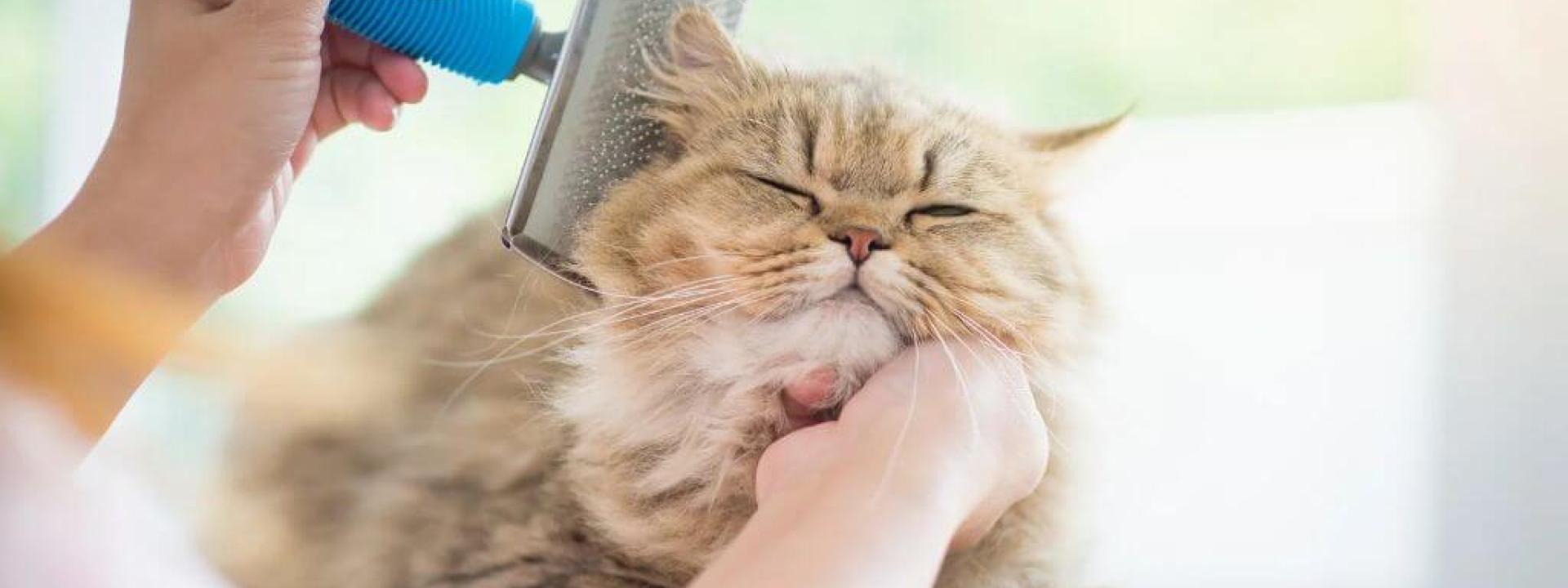
Grooming is another important part of maintaining the skin and coat. Regular brushing can remove loose hair, dirt, and debris while helping prevent tangles and mats. It also gives you an opportunity to inspect the skin and notice changes that might otherwise remain hidden beneath a thick coat.
Environmental and health factors can affect coat quality, too. Fleas and other external parasites can cause itching, inflammation, and hair loss, while allergies and certain skin conditions can change the appearance and texture of the coat. Chronic illness, stress, or physical discomfort can also affect a pet's grooming habits and coat condition. For example, cats experiencing joint pain or reduced mobility may struggle to groom certain areas, leaving their fur matted or unkempt.
Bathing should be approached with the same individualized mindset. Using products intended specifically for pets and following your veterinarian's recommendations can help avoid unnecessary skin irritation. There is no universal bathing schedule that works for every dog or cat, so how often your pet should be bathed depends on their coat, lifestyle, skin health, and any veterinary treatment they may be receiving.

How Often Does My Pet Need to Be Brushed?
How often your pet needs to be brushed depends on their coat. Long-haired dogs and cats may need frequent grooming to prevent mats, while short-haired pets generally require less. Your veterinarian or professional groomer can help you determine an appropriate routine based on your pet's coat type and individual needs.
What Happens During a Veterinary Evaluation?
Your veterinarian will consider the appearance of the coat along with your pet's history and other physical findings. They may ask when you first noticed the change, whether your pet is itchy, what they eat, what parasite prevention they receive, and whether there have been changes in their environment or daily routine.
Depending on what they find, additional testing may be recommended. This could include examining skin or hair samples, testing for parasites or infection, or performing blood work when an underlying medical condition is suspected. The appropriate testing depends on the individual pet and the pattern of changes rather than the appearance of the coat alone.
Look at Your Pet's Coat as Part of the Bigger Picture
Your pet's coat can provide useful clues about their health, but it should not be viewed as a stand-alone measure of wellness. A shiny coat does not guarantee that everything is healthy, just as a little extra shedding does not necessarily mean something is wrong. Instead, think of the coat as one part of what you observe at home.
Pay attention to your pet's normal appearance, grooming habits, appetite, energy, and behavior. When you notice a change that persists or occurs alongside itching, hair loss, skin abnormalities, or other symptoms, bring it up with your veterinarian. Sometimes the cause is straightforward, while other changes require a more thorough evaluation.
Regular grooming, appropriate nutrition, parasite prevention, and routine veterinary care all contribute to healthy skin and coat. Most importantly, becoming familiar with what is normal for your dog or cat makes it easier to recognize when something has changed. Your pet's coat may be only one clue, but it can be a useful one when considered as part of their overall health.
If you have questions, we would love to answer them for you. Please give us a call at the office at (502) 456-2870, or you can email us at [email protected]. Our staff would love to talk with you!
Don't forget to follow us on social media Facebook, Instagram.