
When your dog or cat is anxious, you may notice changes that are hard to miss: pacing, hiding, vocalizing, trembling, restlessness, or suddenly staying close to you. Stress like this can be triggered by thunderstorms, unfamiliar visitors, changes at home, travel, being left alone, or other situations that feel overwhelming to your pet. A designated calm space can give them somewhere familiar to retreat when they need a break, but it works best as one part of a broader approach to managing anxiety in pets.
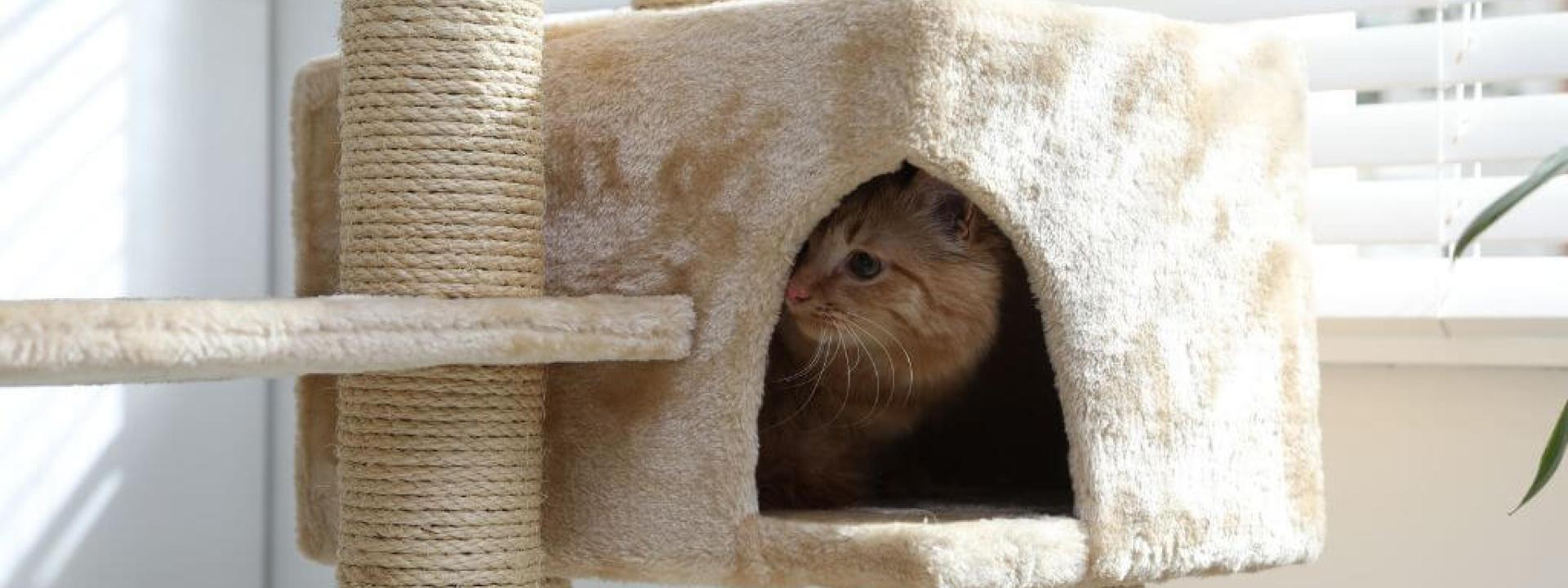
The right setup will look different for every pet. Some dogs relax in an open room near their family, while others prefer a covered crate or quiet corner. Cats may feel more comfortable in a tucked-away space with an elevated resting area or a place to hide. The goal is to create a space your pet can choose when they want distance and quiet, rather than forcing them to stay there when they are distressed.
Here are a few things to consider when creating a safe space for your pet.
Choose a Calm, Comfortable Location
Start by paying attention to where your pet already goes when they want to rest or get away from activity. A spare bedroom, quiet corner, gated area, cat tree, covered crate, or other low-traffic spot may work well. Look for a location that is away from heavy foot traffic while still allowing your pet to feel connected to the household.
Consider what might make the area more or less comfortable. Bright lights, sudden noises, slippery floors, frequent interruptions, and limited escape routes may make some pets more uneasy. A nonslip surface can also give dogs and cats more secure footing, particularly if they are already nervous or have difficulty moving around comfortably.
Let your pet investigate the area at their own pace rather than placing them there and expecting them to settle immediately. A calm space is more useful when your pet already associates it with rest, safety, and familiar surroundings.
Add Familiar Items Your Pet Enjoys
Once you have chosen a location, add a few familiar items that your pet already uses and enjoys. A comfortable bed or blanket can provide a predictable place to rest, while a favorite toy may make the space feel more familiar. For cats, consider adding an elevated perch or an appropriate hiding place, since having options for retreat can be particularly useful.
You do not need to fill the area with equipment. Too many new objects may actually make the space less appealing to a cautious pet. Start with a few familiar items and see how your pet responds.
Food-based enrichment may also be appropriate for pets that are comfortable eating when stressed. A food puzzle, stuffed toy, lick mat, or other enrichment activity can give some pets something constructive to focus on. However, an extremely anxious pet may be unwilling to eat, so do not assume that treats or toys will resolve significant anxiety.
Reduce Noise & Other Sources of Stress
Think about what typically triggers your pet and adjust the environment when you can. During a thunderstorm, for example, closing curtains and windows may reduce some visual and auditory stimulation. A fan or gentle background sound may also help mask sudden household noises for some pets.
For pets who become anxious when visitors arrive, the calm space can give them a place to retreat before or during the activity. Ask guests to leave your pet alone rather than encouraging them to come out, particularly if your pet is hiding or showing other signs of fear. Giving them the ability to move away can prevent an already stressful situation from becoming more intense.
Environmental management is an important part of addressing fear and anxiety. Veterinary behavior guidelines emphasize identifying triggers and using environmental changes, barriers, and gradual exposure to help prevent repeated distress.
Make the Space Part of Your Pet's Routine
A calm space should not only appear when something frightening is happening. Let your pet spend time there when the household is quiet, too. You might offer a favorite chew, toy, or meal in the area and allow your pet to leave whenever they choose.
This helps keep the space from becoming associated exclusively with scary events. A dog who only sees their crate when everyone is leaving the house may begin to connect the crate with being alone. Similarly, a cat who is always carried into a hiding space when visitors arrive may become more wary of that area.
Instead, allow your pet to use the space as part of ordinary daily life. The intention is to create a familiar option they can seek out, not a place they are sent whenever they display behavior you do not want.
Support Calm Behavior Without Forcing Interaction
Your own behavior can influence the environment, too. When your pet is resting quietly, keep your movements relaxed and avoid repeatedly calling them out of their safe area. Rewarding calm behavior with something your pet enjoys can also support positive associations with settling.
At the same time, avoid forcing an anxious pet to interact. Pulling a hiding cat from under a bed or repeatedly coaxing a frightened dog toward a visitor can increase stress rather than teach them that the situation is safe. Give your pet room to make choices while you work on managing the situation around them.
Predictable routines can also be helpful for pets who become unsettled by changes. Keeping meals, exercise, rest, and other familiar activities reasonably consistent may make daily life more predictable, although routines alone will not resolve every anxiety problem.
Be Careful With Crates & Confinement
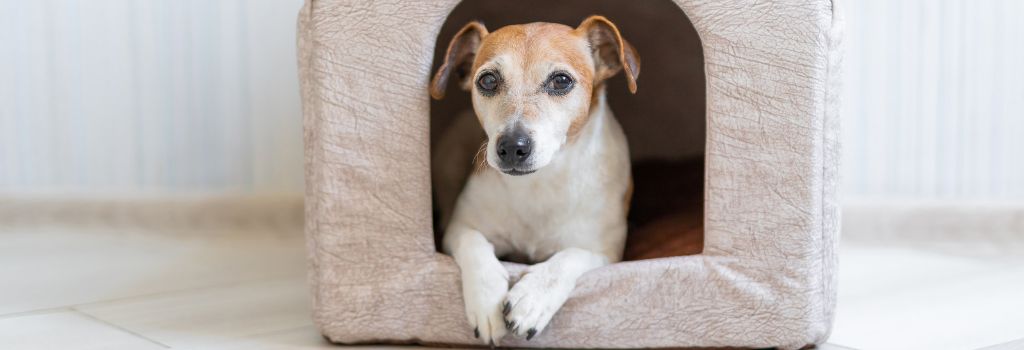
A crate can be an excellent safe space for a dog who already feels comfortable resting there. It should never be introduced as a place of punishment or used to confine a dog who becomes more distressed when enclosed. Some dogs with separation anxiety panic when confined, and confinement can increase their distress rather than helping them settle.
The same principle applies to any enclosed space. Watch your pet's response instead of assuming that a smaller, darker, or more secluded area will automatically feel safer. Panting, frantic scratching, escape attempts, persistent vocalizing, or other escalating signs of distress mean the setup needs to be reconsidered.
Know When Anxiety Needs More Than a Calm Space
A designated retreat can be a useful environmental tool, but it is not a treatment for every anxiety disorder. Persistent fear, destructive behavior, house-soiling, excessive vocalization, aggression, compulsive behavior, or distress when left alone can warrant a veterinary evaluation. Anxiety can also overlap with medical problems, pain, sensory changes, or other conditions that need to be considered.
Keep track of what seems to trigger your pet, what their behavior looks like, and what happens when they use their calm space. Sharing those observations with your veterinarian can make it easier to identify patterns and determine what additional support may be appropriate.
Separation Anxiety May Need a Different Approach
If your pet becomes distressed specifically when you leave, simply giving them a quiet room may not be enough. Separation anxiety is managed with behavior modification and gradual desensitization, and the starting point may be very brief absences that do not trigger a panic response. AAHA's current guidance recommends beginning with absences short enough for the pet to remain calm and increasing the duration gradually.
Some pets may also benefit from medication as part of a veterinary treatment plan. If your dog or cat shows significant distress when left alone, talk with your veterinarian before trying to solve the problem through confinement or repeated departures on your own.
Create a Space Your Pet Can Choose
The most useful calm space is one your pet actually wants to use. Keep it comfortable, familiar, and easy to access, and give your pet the freedom to come and go whenever that is safe. Over time, the space may become a predictable place to rest when the household gets busy or a stressful trigger appears.
Remember that the goal is not to eliminate every situation that makes your pet nervous. It is to give them a safe option, reduce unnecessary stress, and recognize when their anxiety needs additional help. With thoughtful environmental changes and guidance from your veterinary team when needed, you can give your pet more opportunities to feel secure at home.
If you have questions, we would love to answer them for you. Please give us a call at the office at (502) 456-2870, or you can email us at [email protected]. Our staff would love to talk with you!
Don't forget to follow us on social media Facebook, Instagram.